
Singapore Company DPO Data Protection Officer Registration Guide (DPO Declaration/Update Details)
According to Singapore's Personal Data Protection Act 2012 (PDPA), all companies operating in Singapore must designate at least one Data Protection Officer (DPO) and make the DPO's contact information publicly available. This article will provide a detailed introduction to DPO responsibilities, DPO registration process, and common DPO-related questions.
DPO Responsibilities
Core DPO responsibilities include:
- Ensuring PDPA compliance: Developing and supervising the company's data protection policies to ensure compliance with all PDPA requirements.
- Promoting data protection culture: Promoting the importance of data protection within the company and raising employee awareness of data protection.
- Efficiently handling data queries: Responsible for handling queries, complaints, and access requests from data subjects.
- Personal data risk management: Identifying and managing data breaches and other potential risks.
- Liaising with PDPC: Communicating with PDPC when necessary to ensure corporate compliance.
DPO work can be full-time or combined with other job responsibilities, depending on company size and data processing circumstances. Companies can outsource some DPO functions to third-party service providers based on actual needs, but ultimate compliance responsibility remains with the company.
Registering and Updating DPO Information
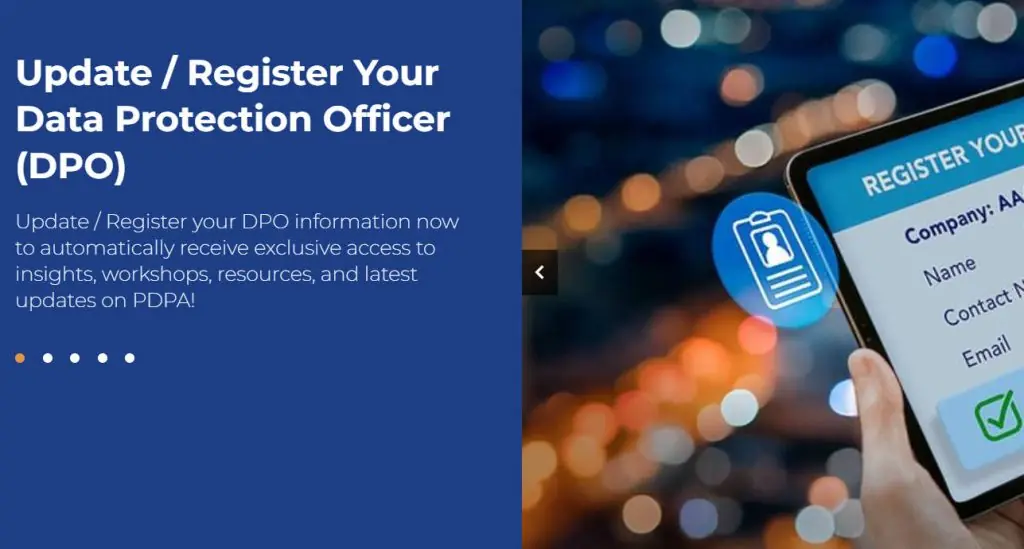
Companies can register or update DPO information through the ACRA BizFile+ platform using Corppass. If the company is not registered with ACRA, DPO registration can be completed through the online form provided by PDPC. After registering a DPO, companies can benefit from the following advantages:
- Free participation in workshops and access to resources: Supporting DPOs in safe and compliant data usage.
- Receiving latest PDPA information and best practice updates: Helping companies understand the latest trends in data protection.
- Participating in exclusive networking events and exchanges: Expanding networks in the data protection field.
- Gaining insights on preventing data breaches: Timely understanding of the latest response solutions and preventive measures for data breaches.
Singapore Company DPO Frequently Asked Questions
Q1. Is it mandatory to register DPO through BizFile+?
While companies must appoint a DPO and make their business contact information public, registering the DPO through BizFile+ is not mandatory. After registering a DPO, companies will benefit from free resources and training opportunities provided by PDPC, which helps improve data protection capabilities and compliance.
Q2. Must all companies appoint a DPO?
Yes, all companies operating in Singapore, including sole proprietorships, must appoint at least one DPO responsible for ensuring company compliance with PDPA regulations. Additionally, companies must ensure that at least one DPO's business contact information is publicly available, which can be the company's general phone number or email as contact information.
Q3. Who should be appointed as the company's DPO?
The DPO can be a dedicated data protection officer or an existing employee with relevant data protection knowledge. An ideal DPO should have the following characteristics:
- Member of management or someone who reports directly to management;
- Has the skills and knowledge to drive data protection policies and practices within the company;
- It is recommended that the DPO attend PDPA foundation courses to gain in-depth understanding of PDPA requirements and obtain the ability to establish robust data protection systems through the PDP Practitioner Certificate (Singapore).
If the company has limited human resources, some DPO responsibilities can be outsourced to third-party service providers, but the company remains responsible for compliance.
Q4. Will there be penalties for missing the registration deadline in PDPC's email?
PDPC encourages companies to complete DPO registration as soon as possible, but missing the registration deadline will not result in direct penalties. However, if companies cannot prove they have appointed a DPO and made their contact information public, they may face PDPC enforcement action.
Q5. What are the consequences of not appointing a DPO?
If companies fail to appoint a DPO or fail to comply with other PDPA requirements, PDPC may take measures such as warnings, directions, or financial penalties depending on the specific circumstances. Companies with serious violations may face fines of up to SGD 1 million, therefore, companies must ensure they appoint a DPO and comply with data protection regulations.
Q6. When should DPO information be updated if it changes?
PDPC recommends that companies update DPO information as soon as possible after changes to ensure the public can contact the DPO through accurate contact information.
Q7. Does a holding company without employees need to appoint a DPO?
As long as the company processes or controls personal data, even without employees, it must comply with PDPA and appoint a DPO. This personal data may come from external individuals such as customers or shareholders, therefore, companies must ensure compliance.
Q8. If a company is dormant, in liquidation, or about to close, does it still need to appoint a DPO?
Even if a company is in liquidation or about to close, as long as it still collects, uses, or discloses personal data, it must comply with PDPA requirements, including appointing a DPO.
Q9. Must the DPO be a Singapore citizen or an employee residing in Singapore?
PDPA does not stipulate the DPO's nationality or whether they need to reside in Singapore. The DPO does not necessarily have to be an internal company employee, but the DPO's business contact information must be reachable when the public makes inquiries. It is recommended that companies use Singapore contact information to facilitate smooth communication with the public.
Conclusion
Singapore companies need to place high importance on DPO appointment and declaration to ensure compliance with PDPA requirements. By registering DPOs in a timely manner, companies can not only obtain resource support provided by PDPC but also reduce data protection compliance risks.
For more detailed information about DPO, or if you need assistance with company registration DPO, please feel free to contact our customer advisors for consultation.